Pacing as Cognitive Architecture
Film pacing is often described as instinct, energy, or “feel.” Those descriptions are useful, but incomplete. At a systems level, pacing is an arrangement of perceptual demands. Every cut asks the viewer to reorient, update spatial information, reassess emotional priorities, and decide where attention should move next. Every sustained shot removes some of that friction and gives the viewer more time to inspect, anticipate, and emotionally inhabit the frame. For directors, editors, and producers, the practical question is not whether a sequence feels fast or slow. It is whether its visual cadence allocates the viewer”s limited cognitive capacity to the information that matters most.
A carefully designed film rhythm and pacing strategy therefore functions like cognitive infrastructure. Cut frequency regulates how often the viewer must rebuild a mental model of the scene, while shot duration determines how long that model can remain stable. This relationship affects narrative comprehension, emotional continuity, and memory. A rapid sequence may generate urgency by compressing decision time, but it can also consume working-memory bandwidth through constant visual resets. A longer take can protect spatial clarity and invite deeper observation, yet it may lose momentum if the frame contains too little meaningful change.
The central trade-off is between guided stimulation and sustained immersion. Rapid montage controls attention through frequent novelty, making it effective for impact, compression, and escalating action. Extended takes shift responsibility toward the viewer, who must search the frame, interpret silence, and anticipate what has not yet happened. Neither structure is inherently superior. The reliable approach is to match cadence to cognitive purpose, then introduce variation deliberately so that the audience remains oriented while tension continues to build.
The Neurological Cost of the Rapid Cut
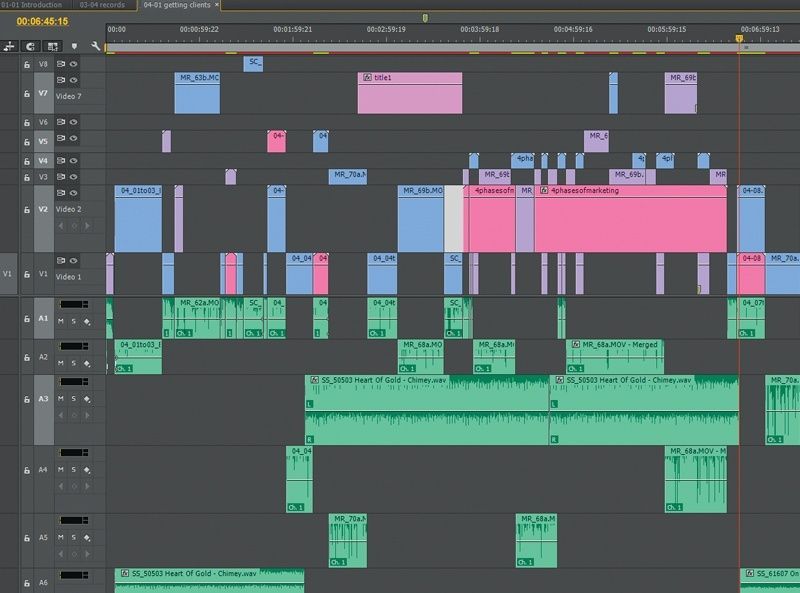
High-frequency cutting creates a sequence of small executive tasks. The viewer must identify a new viewpoint, locate relevant subjects, compare the new image with the previous one, and update the causal model of the scene. When cuts are motivated by movement, eyelines, sound, or clear spatial logic, these tasks can remain manageable. When transitions are abrupt and poorly anchored, the viewer spends more effort resolving orientation than processing story information.
This is best understood as a reset mechanism rather than a simple increase in excitement. A cut can interrupt visual attention and force the perceptual system to establish a new center of gravity. A shift from a wide exterior to a tight interior close-up, for example, changes scale, spatial coordinates, and emotional emphasis at once. Research published in a study of editing and narrative cognition in virtual reality found that abrupt editing disrupted spatial and temporal integration, while an unedited version supported more stable attention and emotional immersion. VR is a distinct medium, but the underlying production lesson is broadly relevant: orientation is a cost, and unnecessary orientation costs reduce the resources available for interpretation.
Perceptual fatigue does not always appear as obvious boredom. It may present as reduced comprehension, weak recall of visual details, emotional flattening, or an audience that remembers isolated images but not the sequence of cause and effect connecting them. A systematic review of television pacing and executive function in young children, available through the National Library of Medicine, found that evidence is mixed and depends on content, viewer characteristics, and methodology. That caution matters. The research does not justify a universal rule against fast editing, but it does reinforce the need to distinguish stimulation from usable information.
- Orientation loss: the viewer can no longer confidently track where subjects are positioned or how spaces connect.
- Attention fragmentation: each new shot competes with unresolved information from the previous one.
- Emotional dilution: reaction shots and action inserts arrive too quickly for feeling to accumulate.
- Recall degradation: memorable fragments remain, while the larger narrative logic becomes harder to reconstruct.
The operational test is simple. Review a dense sequence without sound, then describe the spatial and causal progression from memory. If the sequence produces energy but not a stable mental map, the cut rate may be exceeding the audience”s processing capacity. The solution is not necessarily slower editing. It may be stronger eyeline continuity, fewer competing focal points, more consistent screen direction, or a short decompression shot that allows the previous event to register.
Sustaining Psychological Tension Through the Unbroken Take
An unbroken take changes the source of tension. Rapid cutting creates surprise by controlling what appears and when it appears. Continuity creates anticipation by allowing the audience to see time passing without relief. When the camera remains with a character in a corridor, a kitchen, or a parked vehicle, the viewer begins to monitor small changes: a pause that lasts too long, a glance toward an unseen doorway, a hand that moves closer to an object. The anxiety comes from knowing that the situation is unfolding in real time and that the frame may not provide an escape.
This structure also increases viewer agency. In a tightly edited sequence, the cut determines the next object of attention. In a sustained frame, the audience must search. Eye-tracking research in VR offers a useful parallel because viewers can select their own perspective within the environment. The cited experiment reported that the unedited condition generated the strongest visual attention and emotional immersion, with 75 percent of viewers rating it highly immersive. The result should not be treated as proof that every scene benefits from a long take, but it demonstrates how stable temporal continuity can support emotional coherence.
Stationary or restrained frames are especially effective when they contain layered possibilities. A doorway in the background, a character who remains partially obscured, or an object whose significance is not yet explained gives the viewer a reason to keep scanning. The director is not removing information. The director is distributing it across time and allowing the viewer to discover it. This can produce a stronger form of tension than a cut to a reaction shot because the audience must decide where danger or meaning may emerge.
However, duration must be earned. A long take becomes inert when the frame offers no evolving relationship among bodies, objects, sound, and expectation. Spatial establishing shots are one way to protect continuity when a story moves into a new location. Research in Frontiers in Human Neuroscience found that establishing-shot type affected measures associated with arousal and cognitive load during transitions between unfamiliar interior locations. Geographic establishing shots produced lower average pupil diameter than several alternatives, while actor-focused establishing shots produced distinct prefrontal responses. The practical implication is not to insert an establishing shot mechanically. It is to provide the form of orientation the scene requires, then allow the emotional duration to begin once the viewer understands the space.
Comparative Dynamics Across Shot Length Strategies
Micro-montages and extended sequences are different cognitive systems. A micro-montage distributes meaning across rapid juxtapositions, encouraging the viewer to infer relationships and absorb compressed information. An extended sequence preserves continuity, supporting spatial reasoning, emotional accumulation, and anticipatory attention. The right choice depends on whether the scene”s primary task is to accelerate decisions, clarify process, deepen subjectivity, or make the viewer wait.
| Strategy | Mental friction | Sensory load | Retention profile | Strongest use cases |
|---|---|---|---|---|
| Micro-montage | High, because orientation repeats frequently | High, with rapid visual and auditory change | Strong for impressions, weak if causal links are unclear | Compression, pursuit, preparation, impact, escalating conflict |
| Moderate cutting | Manageable when continuity is clear | Variable and controllable | Balanced recall of action and context | Dialogue, investigation, procedural action, emotional exchange |
| Extended take | Low orientation friction, higher interpretive responsibility | Lower change rate, but potentially intense anticipation | Strong for spatial and emotional continuity | Dread, observation, performance, ambiguity, immersion |
A Structured Protocol for Modulating Visual Cadence
Pacing decisions become more reliable when they are treated as an editorial audit rather than a sequence of isolated preferences. Start by identifying what the viewer must understand, feel, and remember at each stage. The baseline cut interval should emerge from scene complexity and emotional payload, not from a general desire to make the sequence feel modern or energetic.
- Audit complexity and emotional payload. Count the active variables in the scene: characters, locations, objects, goals, reversals, and simultaneous sound cues. A simple emotional beat may need a longer duration because the audience must read performance. A complex action beat may need clearer spatial anchors before the cut rate increases. Establish a baseline cadence, then mark the moments where acceleration or deceleration serves a specific narrative change.
- Design cognitive decompression periods. After a dense burst of information, provide a shot or beat that stabilizes the viewer”s mental model. This may be a wide frame, a held reaction, a quiet sound bridge, or a moment of visual stillness. Silence is not empty space. Research on sitcom form from the University of Rochester Journal of Undergraduate Research shows how pauses allow visual punchlines, reactions, and performance details to register before release. The same principle applies beyond comedy: a pause consolidates meaning.
- Harmonize audio and visual transitions. Sound can reduce orientation friction by carrying a location, action, or emotional state across a cut. A continuous ambience may make a visual transition feel coherent, while a precisely placed impact can make a cut feel intentional rather than disruptive. Audit whether music is merely increasing tempo or actually clarifying the viewer”s attention. When image and sound change simultaneously without hierarchy, cognitive load rises. When one element provides continuity while the other introduces change, the sequence gains control.
Validation should occur at multiple distances. Watch the scene moment by moment to inspect continuity and attention, then review it after a delay to test memory. Ask a viewer to identify the sequence”s turning point, spatial layout, and emotional progression without prompting. If those answers are inconsistent, the problem may not be performance or script. It may be an unstable cadence that prevents important information from consolidating.
Mastering the Cadence of Modern Storytelling
Visual pacing is a management system for attention, orientation, memory, and emotion. Cut frequency creates opportunity and cost: it can deliver urgency, but it also demands repeated cognitive resets. Extended duration protects continuity and enables anticipation, but it must contain enough evolving information to justify the viewer”s investment. The most effective sequences move between these states with intent, using contrast as a structural resource rather than treating speed as a permanent setting.
For editors and directors, the next step is to replace instinctive trimming with systematic design. Audit where the viewer must reorient, where information needs time to settle, and where tension depends on withholding the next cut. Protect spatial clarity before increasing velocity. Insert decompression after high-load passages. Use sound to preserve continuity when the image changes. With these controls in place, pacing becomes more than rhythm. It becomes a stable framework for building immersion, protecting comprehension, and directing the audience”s mental momentum toward the moments that matter.