Rethinking Secondary Footage as Narrative Architecture
B-roll is often treated as visual adhesive: footage added to cover an interview edit, disguise a jump cut, or give the audience something to look at while a voice continues. That definition is useful at a basic production level, but it is an inadequate operating model for serious nonfiction and narrative work. Supplemental footage can do far more than conceal editorial seams. It can establish causality, redirect attention, expose contradiction, control tempo, and carry meaning that the dialogue deliberately leaves unstated.
The cost of treating every cutaway as interchangeable is substantial. A close-up of hands, a generic exterior, or an unmotivated pan may technically cover a splice, yet still weaken the viewer”s relationship with the scene. Arbitrary interruptions reset spatial orientation, dilute tension, and make the film feel assembled rather than observed. Once the audience senses that images are being used merely to protect the edit, emotional immersion becomes harder to sustain.
A stronger approach treats secondary footage as a layered system. Directors define its narrative purpose before production, cinematographers design movement around action and point of view, and editors preserve cognitive continuity while introducing thematic echoes. The result is not simply more attractive coverage. It is a reliable visual framework in which every supporting shot performs a measurable function, whether that function is spatial, emotional, informational, or symbolic.
The Cost of the Filler Mindset and the Role of Cutaways
Traditional cutaways remain valuable. A cutaway can show an object mentioned in dialogue, conceal an edit, clarify a location, introduce a reaction, or compress time. Standard definitions describe B-roll as supplemental material that supports primary A-roll, including interviews, dialogue, establishing shots, inserts, archival images, and atmospheric footage. The problem is not the cutaway itself. The problem is the assumption that any visually related image is sufficient. A shot of a building may cover a transition, but it does not necessarily explain what happened there, whose perspective governs the moment, or why the audience should remain emotionally invested.
The distinction is clear in this Authoritative Source discussion of standard film cutaway principles. A functional cutaway redirects attention while preserving or advancing the scene”s logic. A wallpaper shot merely occupies time. When the visual interruption has no relationship to action, geography, psychology, or theme, it creates a small but cumulative loss of trust. The viewer must repeatedly rebuild the scene instead of progressing through it.
| Wallpaper footage | Active storytelling footage |
|---|---|
| Generic exterior with no narrative consequence | Location detail that establishes pressure, history, or access |
| Unrelated hands or object inserts | Action that reveals process, hesitation, or decision |
| Movement added for visual energy | Movement motivated by a subject, discovery, or emotional shift |
| Atmosphere that repeats what the dialogue already says | Image that complicates, contradicts, or deepens the spoken account |
This changes the production metric. Shot volume is not the same as editorial resilience. Fifty interchangeable clips may provide less usable structure than ten shots designed around narrative beats. Production teams should therefore add a purpose field to the shot list: establish, reveal, contrast, conceal, orient, accelerate, pause, or echo. During ingest, editors can preserve that information in metadata or bins. The objective is operational clarity, so the edit is built from intentional options rather than a large but unfocused footage pool.
Engineering Motivated Camera Movement in Secondary Shots
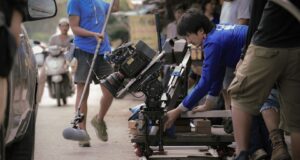
Motivated camera movement functions as a silent narrator. A pan can follow a person, uncover an object, or connect two areas of a room. A push-in can narrow attention as a decision becomes more consequential. A lateral move can reveal a barrier, a witness, or a relationship between subjects. Movement is not automatically meaningful because it is smooth, expensive, or technically complex. Its value comes from the information or feeling produced by its trajectory.

The physics of engagement are practical. Direction establishes expectation, speed establishes urgency, and the endpoint determines what the audience is meant to understand. A slow movement toward a closed door creates a different cognitive contract from a rapid handheld retreat through a corridor. Spatial revelation also matters: if the camera moves before the viewer understands the geography, the shot may create confusion rather than suspense. Secondary footage should therefore be designed around a readable beginning, a motivated path, and a consequential destination.
- Follow visible action when the subject”s movement is the reason for the shot.
- Reveal information at the moment the narrative can support it, not merely when the camera reaches it.
- Match movement direction and screen geography with the surrounding dialogue or action.
- Use speed to reflect pressure, hesitation, routine, or disruption.
- Reserve deliberately unmotivated movement for moments when an omniscient or destabilizing viewpoint is itself meaningful.
Before recording, the camera operator and director should ask whether the move has a specific job. Does it show an action, reveal a location, express an emotional state, or adopt a character”s point of view? Strong shots often combine two of these functions, such as a slow track that follows a worker while gradually exposing the unsafe conditions around the task. If the answer is only that the move looks cinematic, the shot requires further evaluation. Simpler coverage usually protects continuity better and leaves more editorial flexibility.
Movement must also respect blocking. The camera should respond to the subject unless it is clearly representing a character”s perception or an intentional external intelligence. If the camera appears to command people arbitrarily, the scene can feel staged in the wrong way. For documentary work, this is especially important. The camera can interpret reality, but it should not create visual claims that the observed action cannot support.
Environmental Subtext and Cognitive Continuity in the Edit
Viewers process environments continuously, even when attention is focused on speech. Doorways, windows, light direction, background activity, and the relative position of bodies all contribute to a working model of the scene. When an edit jumps between incompatible spatial or temporal conditions without a clear reason, the audience spends cognitive effort repairing the map. That effort may be invisible in a review session, but it appears as reduced tension, weaker comprehension, and a sense that the film is drifting.
Cognitive continuity does not mean that every cut must be literal or slow. It means that changes should be legible within the film”s perceptual rules. A cut from a subject”s interview to the same subject performing the discussed action can strengthen continuity even if the location changes, because the action carries the bridge. Conversely, a cut to an unrelated atmospheric detail may feel disruptive despite matching color and tone. Research on visual development has shown the importance of temporal structure in visual experience. The study titled “Unsupervised experience with temporal continuity of the visual environment is causally involved in the development of V1 complex cells” examined how disrupted temporal correlations affected visual cortical properties in developing rats following eye opening. The findings do not provide a direct editing formula, but they reinforce a useful principle: continuity in visual input is not cosmetic; temporal relationships shape how visual information is organized.
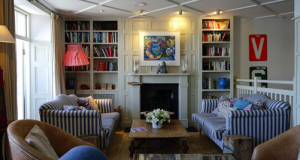
Environmental subtext becomes powerful when the setting supplies evidence that dialogue cannot. A spotless workshop may contradict an account of neglect. A repeatedly locked gate may turn access into a recurring story problem. Empty chairs, obstructed sightlines, or a machine operating without its usual attendant can create questions before anyone states them aloud. Editors should protect these details by tracking geography across the timeline. Label footage by room, camera axis, time of day, and subject position, then build bridge shots that preserve orientation when the story moves.
Visual Motifs and Systematic Thematic Layering
A motif is a recurring element that acquires meaning through purposeful repetition. It may be an object, color, setting, gesture, sound, line of dialogue, or recurring event. The theme expresses what the story means; the motif gives that meaning a concrete, perceptible form. A single image can operate as a metaphor, but repetition turns it into a system. When a door, reflection, thread, or repeated route appears at carefully chosen narrative milestones, the audience begins to associate it with a question or emotional condition.
Motifs are most effective when they develop rather than simply recur. An object may first appear as ordinary background detail, later become evidence, and finally carry a changed emotional charge. Makoto Shinkai”s Your Name., for example, uses lines, routes, screen divisions, and a red thread to explore separation and connection across space and time. The practical lesson is not to imitate those images, but to identify a concrete visual pattern capable of changing meaning as the story advances.
- Define the narrative pressure. Identify the central tension, such as belonging versus exclusion, memory versus evidence, or control versus exposure.
- Select concrete visual candidates. Review locations, props, costumes, vehicles, gestures, and repeated actions for elements that can carry that tension.
- Map appearances to milestones. Decide where the motif is introduced, reinforced, disrupted, and transformed. Avoid placing it everywhere, because indiscriminate repetition removes significance.
- Build the motif into production documents. Add it to the script breakdown, shot list, continuity notes, and location plan so it survives schedule pressure.
- Evaluate the edit as a progression. Check whether each recurrence adds information or emotional contrast. If an appearance changes nothing, it may be decorative rather than structural.
This framework also improves collaboration. Production design can place the object with intent, cinematography can give it a consistent visual grammar, and editorial can decide when its meaning should register consciously. The motif then becomes an infrastructure layer rather than an isolated directorial flourish. It supports memory, creates cohesion across interviews and observational scenes, and gives the finished film a recognizable internal logic.
Transform Secondary Shots into Your Strongest Narrative Layer
The transition from cosmetic B-roll to structural narrative begins with a change in planning language. Replace “get some coverage” with explicit functions: orient the viewer, expose a contradiction, follow a decision, preserve geography, or establish a motif. Design movement around action and point of view. Protect environmental continuity in the edit. Catalog recurring visual elements before the shoot, then test every secondary shot against the story”s changing pressure.
The long-term benefit is cumulative. Deliberate secondary footage reduces editorial friction, protects emotional momentum, and gives directors more control when the primary interview or scene does not carry the full argument alone. It also improves production efficiency because each setup has a defined return. When teams stabilize the visual system early, they can scale ambition without sacrificing clarity. Secondary shots stop being disposable insurance and become the layer that connects information, emotion, space, and meaning into a coherent moving structure.